

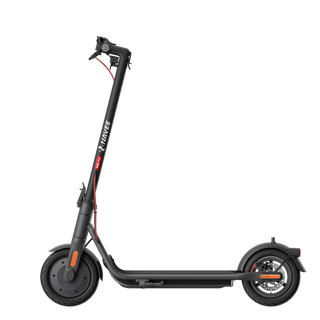
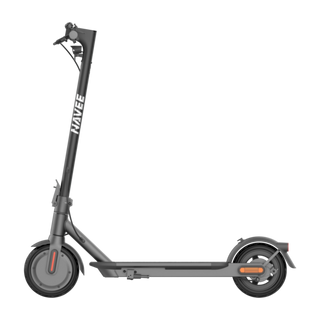
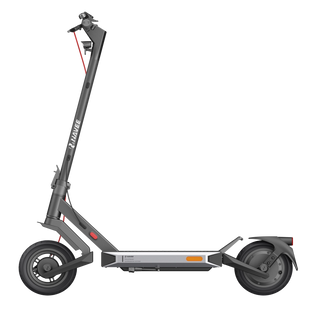
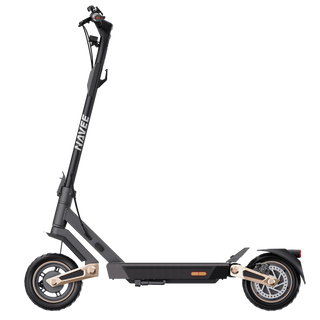

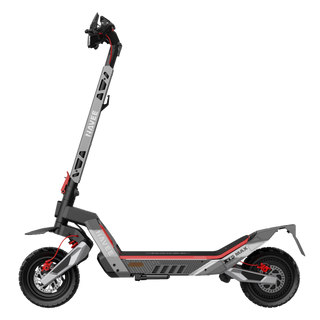
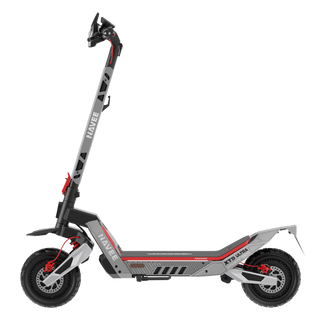
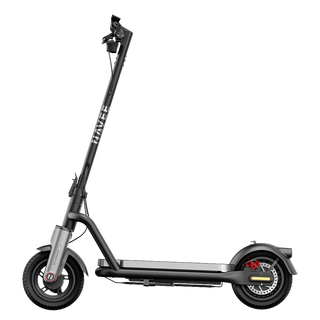

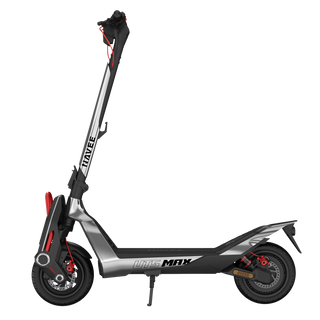

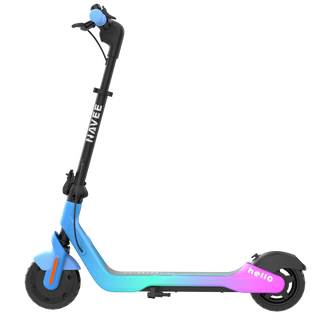
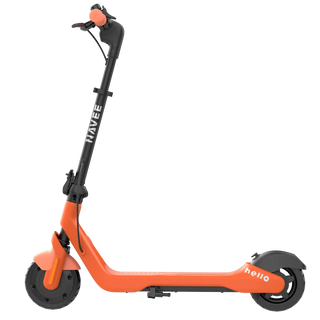
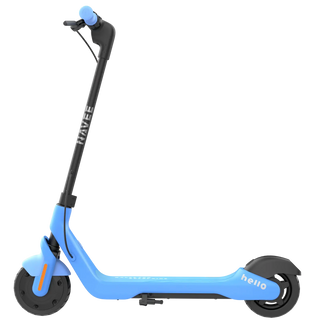



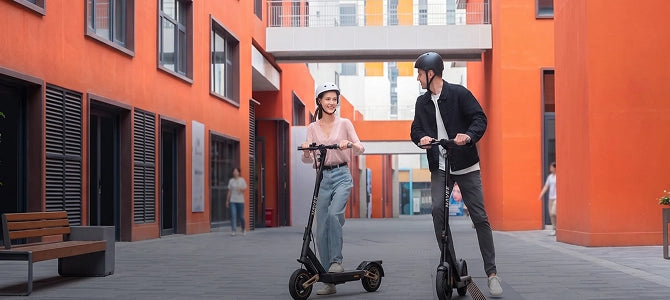





As of 2027, the German government plans to mandate the equipping of new e-scooters with turn signals. This change aims to increase road safety by providing clearer indication of turning maneuvers. In this article, we explain why the turn signal requirement is being introduced, what changes are to be expected, how riders can prepare, and what consequences the new regulation will have for manufacturers, sharing providers, and private users.
Why are turn signals becoming mandatory?
The main reasons for the introduction are the increasing number of turning accidents, limited visibility in the dark, and uncertainty when indicating direction with hand signals. Flashing LED signals ensure a highly visible, continuous direction indicator without having to remove hands from the handlebars.
What exactly is involved? (Probable key points)
- From 2027, newly approved e-scooters must be equipped with two permanently integrated turn signals at the front and two at the rear.
- Turn signals must be weatherproof and meet a minimum brightness and a standardized flashing frequency.
- Operation must be conveniently possible from the handlebars (thumb/thumb rocker switch, one-handed operation).
- Existing vehicles will likely receive grandfathering; discussions about retrofitting requirements are possible, and a transitional period is probable.
Expected requirements for turn signal systems
- Permanent mounting on the vehicle (no loose clip solutions without approval)
- IP protection against splash water (at least IPX4 / better IPX5)
- Consistent flashing frequency (approx. 1–2 Hz) and sufficient side/front visibility
- Automatic deactivation after the end of a curve or timeout

Fines and liability issues (Outlook)
Specific fines will only be set with the final legal ordinance. However, enforceable sanctions are expected for:
| Violation | Possible Sanction | Consequence |
|---|---|---|
| Riding without mandatory turn signals (for mandatory model) | Fine (e.g., €20–35) | Warning / Fine |
| Riding with defective turn signals | Minor fine (e.g., €15) | Obligation to repair |
| Accident due to lack of direction indication | Increased liability / police investigations | Insurance problems possible |
Benefits for road safety and users
- Better predictability of driving maneuvers
- Fewer conflicts with pedestrians, cyclists, and cars when turning
- Increased visibility in the dark
- Uniform standards for manufacturers and sharing fleets
Which vehicles are already prepared?
Some manufacturers already offer models with integrated turn signals or have developed retrofitting solutions. When buying, look for manufacturer information on compliance with standards, IP protection class, and robust handlebar controls.
Checklist when buying or inspecting your scooter
- Does the model have fixed, integrated turn signals at the front and rear?
- Is operation from the handlebars intuitive and possible with one hand?
- Is there information on the protection class (e.g., IPX4/IPX5)?
- Is the flashing frequency and brightness specified?
- How does the turn signal system affect range and power consumption?
Retrofitting: What makes sense and what doesn't?
Inexpensive clip-on turn signals from retailers are often visually helpful but do not necessarily meet legal requirements. For legally compliant retrofitting, only approved retrofitting kits should be used, which offer secure mounting, a weatherproof design, and approved handlebar control.
Specific recommendations for riders
- When buying new, look for integrated turn signals
- Regularly check turn signals (visibility, function)
- Do not neglect reflectors and additional lighting
- Pay attention to local changes on-site (some cities may issue stricter rules)
- Contact sharing providers if there are differences in fleet equipment
Impacts for sharing providers and manufacturers
Sharing fleets will have to technically update their vehicles or decommission older models. Manufacturers face increased testing efforts (certification, durability of turn signal modules, IP testing). At the same time, opportunities arise for new service revenues (retrofitting solutions, maintenance contracts).
FAQ: Frequently Asked Questions about the Turn Signal Requirement
Will my old e-scooter have to be retrofitted?
It is expected that many existing vehicles will retain grandfathering. A general retrofitting obligation has not been definitively confirmed; however, local regulations may impose further restrictions.
Can I use simple clip-on turn signals?
Clip-on turn signals can offer short-term visibility but do not necessarily replace a type-approved, permanently installed system. For legal validity, tested solutions are recommended.
Does the obligation also apply to rental/sharing scooters?
Yes. Sharing operators are expected to be among the first to adapt their fleets, as they bear a high degree of public responsibility.
How much does a turn signal increase energy consumption?
Modern LED turn signals consume very little power. The impact on range is negligible in practice, provided the electrical system is designed efficiently.
Practical example for cities: Local implementation
Cities such as Berlin, Munich, and Hamburg have already begun to tighten municipal regulations on the parking and approval of rental vehicles. These municipalities could also introduce stricter controls, e.g., mandatory fleet updates by a certain date.
Outlook: What comes after 2027?
The turn signal requirement is only one step. Further expected measures could include: stricter lighting regulations, mandatory traction control systems (TCS) in urban fleets, or extended license plate and insurance requirements. Manufacturers, operators, and users should closely monitor developments.
Conclusion
The planned turn signal requirement from 2027 is a pragmatic step to increase road safety. For riders, it means more comfort and visibility when turning. For manufacturers and sharing providers, it brings additional requirements, but also market opportunities. Those who, when purchasing new vehicles, already pay attention to integrated, tested turn signals and regularly check their existing equipment, will be well prepared for the upcoming regulations.



Leave a comment
All comments are moderated before being published.
This site is protected by hCaptcha and the hCaptcha Privacy Policy and Terms of Service apply.